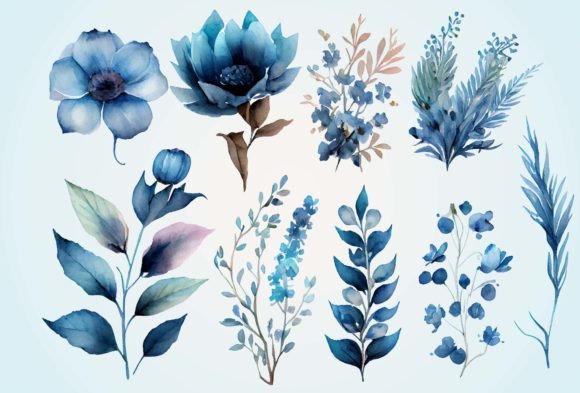
Integrating Blue Watercolor Flower Clipart into Professional Design Workflows
In the fast-paced world of digital content creation, the demand for high-quality, versatile visual assets is constant. Whether you are a freelance graphic designer, a small business owner managing your own marketing, or an educator creating engaging materials, the right imagery can significantly elevate your output. Blue Watercolor Flower Clipart has emerged as a staple resource for creators seeking to blend organic elegance with modern digital efficiency. This specific collection, featuring a watercolor blue floral arrangement isolated on a white background, offers more than just aesthetic appeal; it provides a functional tool that integrates seamlessly into various professional workflows.
Understanding how to effectively utilize these assets requires looking beyond their immediate visual impact. It involves recognizing where they fit into the broader lifecycle of a project, from initial concept and preparation to final execution and quality control. By treating these digital elements as integral components of your design process, you can enhance productivity, maintain brand consistency, and produce polished results that resonate with your audience.
The Strategic Value of High-Resolution PSD Assets
When selecting digital assets for professional use, file format and resolution are critical factors that determine usability. The collection in question includes four PSD files with transparent backgrounds, rendered at a high resolution of 300 dpi. This technical specification is not merely a detail; it is a foundational element of a smooth workflow.
The PSD (Photoshop Document) format allows for non-destructive editing. Unlike flat image formats such as JPEG or PNG, PSD files retain layer information. This means you can adjust the opacity, blending modes, and color balance of individual floral elements without compromising the integrity of the original artwork. For professionals who need to adapt assets to different brand guidelines or lighting conditions, this flexibility is invaluable. The 300 dpi resolution ensures that the images remain crisp and clear whether they are used for digital screens or printed materials, eliminating the need for upscaling or worrying about pixelation.
Furthermore, the transparent background saves significant time during the implementation phase. Designers do not need to spend minutes manually removing backgrounds or dealing with jagged edges. This efficiency allows for rapid prototyping and iteration, which is essential when working under tight deadlines or managing multiple client projects simultaneously.
Preparation and Organization for Efficient Use
Before diving into the creative process, proper preparation of your digital library is key. Integrating Blue Watercolor Flower Clipart into your routine begins with organization. Since this collection features a limited spring pastel color palette of dusky blue, heather lilac, and beige, it is beneficial to categorize these assets alongside other complementary resources.
- Create Dedicated Folders: Store the four PSD files in a clearly labeled directory within your asset management system. Consider subfolders for "Floral Elements," "Pastel Palettes," or "Wedding Stationery Resources" to facilitate quick retrieval.
- Establish Color Profiles: Note the specific hex codes or CMYK values of the dusky blue, heather lilac, and beige tones. Having these references handy ensures that any additional design elements you create, such as text boxes or geometric shapes, harmonize perfectly with the watercolor flowers.
- Test Compatibility: Verify that your design software supports PSD layers with transparency. While Adobe Photoshop is the native environment, many other tools like Affinity Photo, Procreate, and even some versions of Canva now support PSD imports. Understanding your toolset’s capabilities prevents technical hurdles mid-project.
This preparatory step may seem minor, but it reduces friction during the creative phase. When you know exactly where your assets are and how they behave technically, you can focus entirely on composition and messaging rather than troubleshooting file issues.
Implementation Across Diverse Creative Projects
The versatility of this watercolor blue floral arrangement collection makes it suitable for a wide array of applications. Its glamorous yet soft aesthetic bridges the gap between formal elegance and approachable charm. Here is how you can integrate these elements into specific workflows:
Wedding Stationery and Event Planning
For wedding planners and stationery designers, consistency and theme cohesion are paramount. The dusky blue and heather lilac tones evoke a sense of calm and romance, ideal for spring and summer weddings. You can use the floral arrangements as central motifs on save-the-date cards, invitations, and menu cards. Because the files are high-resolution, they can be scaled for large-format prints like welcome signs or backdrop banners without losing detail. Layering these flowers behind elegant typography creates depth and visual interest, guiding the viewer’s eye through the information hierarchy.
Digital Marketing and Branding
Bloggers and social media managers can leverage these clipart elements to create cohesive visual identities. Use the beige and blue tones to design blog banners, email newsletter headers, or Instagram story templates. The transparent background allows you to place the flowers over solid colors, gradients, or photographic backgrounds, adapting them to fit your brand’s current campaign. This adaptability supports a consistent aesthetic across platforms, reinforcing brand recognition.
Educational and Productivity Materials
Educators and productivity enthusiasts often seek ways to make learning materials and planners more engaging. Incorporating soft watercolor florals into worksheets, presentation slides, or digital planners can reduce visual stress and create a welcoming atmosphere. For instance, using the floral elements as section dividers in a planner or as decorative borders in educational handouts adds a touch of professionalism and care, making the content more appealing to students or clients.
Quality Control and Consistency Maintenance
Maintaining high standards throughout your project lifecycle involves rigorous quality control. When using watercolor blue floral arrangement collection isolated clip-art, pay attention to how the elements interact with other design components.
Ensure that the color balance of the flowers complements rather than clashes with your text and background colors. The pastel palette is subtle, so it pairs well with dark gray or navy text for readability, but may get lost against light beige backgrounds. In such cases, consider adding a slight drop shadow or placing the flowers on a contrasting panel.
Additionally, check the resolution settings before final export. If you are designing for print, ensure your document is set to 300 dpi from the start. For digital use, 72 dpi is standard, but starting with high-res assets gives you the flexibility to crop and resize without quality loss. Always preview your designs on multiple devices or print proofs to catch any alignment or color shifting issues early.
Long-Term Usability and Asset Management
Investing in high-quality clipart is a long-term strategy. Unlike trend-driven graphics that may become outdated quickly, classic watercolor florals have enduring appeal. By building a library of such assets, you create a reusable resource bank that speeds up future projects.
Regularly update your asset library with new variations or complementary elements. If you find this blue floral collection particularly effective, consider exploring similar palettes or styles to expand your design toolkit. Documenting which projects yielded the best results with these assets can also inform future decisions, helping you refine your design intuition and workflow efficiency.
In conclusion, Blue Watercolor Flower Clipart is more than a decorative addition; it is a practical tool that enhances creativity, streamlines production, and elevates the professional quality of your work. By understanding its technical specifications, preparing your workspace, and integrating it thoughtfully into various projects, you can maximize its value and achieve consistent, high-quality outcomes. Whether you are crafting wedding invitations, designing digital content, or organizing educational materials, these assets provide the flexibility and elegance needed to succeed in today’s competitive creative landscape.